AI Without Borders: How Artificial Intelligence Is Transforming International Trade
30 June 2026
Artificial Intelligence is rapidly reshaping how businesses trade, source and operate across borders. For UK importers, exporters and internationally focused businesses, AI is no longer a future concept — it is becoming a practical commercial tool.
From export strategy and customs intelligence to customer targeting, translation and supply chain forecasting, AI is transforming international trade at speed.
But while opportunity is significant, so too are the risks. Businesses adopting AI without oversight may expose themselves to compliance gaps, misinformation or poor strategic decisions.
AI and Export Strategy: Smarter Market Selection, Customer Targeting and Market Reach
AI is helping exporters combine market intelligence with customer targeting, replacing broad speculation with more precise, data-led growth planning.
Businesses can use AI to analyse demand trends, identify promising markets, compare tariff environments, monitor competitors and prioritise customers based on behaviour or regional opportunity.
For UK exporters, this means sharper market-entry decisions, better customer targeting and reduced expansion risk. Chamber International’s AI Market Scan, delivered with Rove, supports this by helping exporters assess demand, competition, compliance and route-to-market opportunities across more than 30 markets.
Used strategically, AI can help businesses target the right markets faster — and with greater commercial confidence.
Customs Intelligence and Compliance
AI is also reshaping customs administration through practical compliance support.
Businesses are using AI to assist with commodity code research, document drafting, rules of origin interpretation, paperwork checks and compliance risk flagging.
AI is already being deployed across global customs and logistics operations. Customs authorities and freight providers increasingly use AI to identify high-risk shipments, detect anomalies in declarations and automate document verification processes to speed up border clearance.
For example, exporters may use AI to compare tariff classifications across markets, while importers can review supplier declarations for potential discrepancies before shipment.
This can improve efficiency and reduce administrative burden, but caution is essential. AI-generated customs outputs should never replace expert verification, as errors can still lead to delays, audits or penalties.
AI should strengthen compliance — not automate trust.
Supply Chains and Predictive Planning
AI-driven forecasting is helping exporters make faster, more informed supply chain and delivery decisions.
Exporters are using AI to forecast international demand, predict delivery disruptions, optimise inventory for overseas orders, assess supplier reliability and compare freight routes or logistics costs.
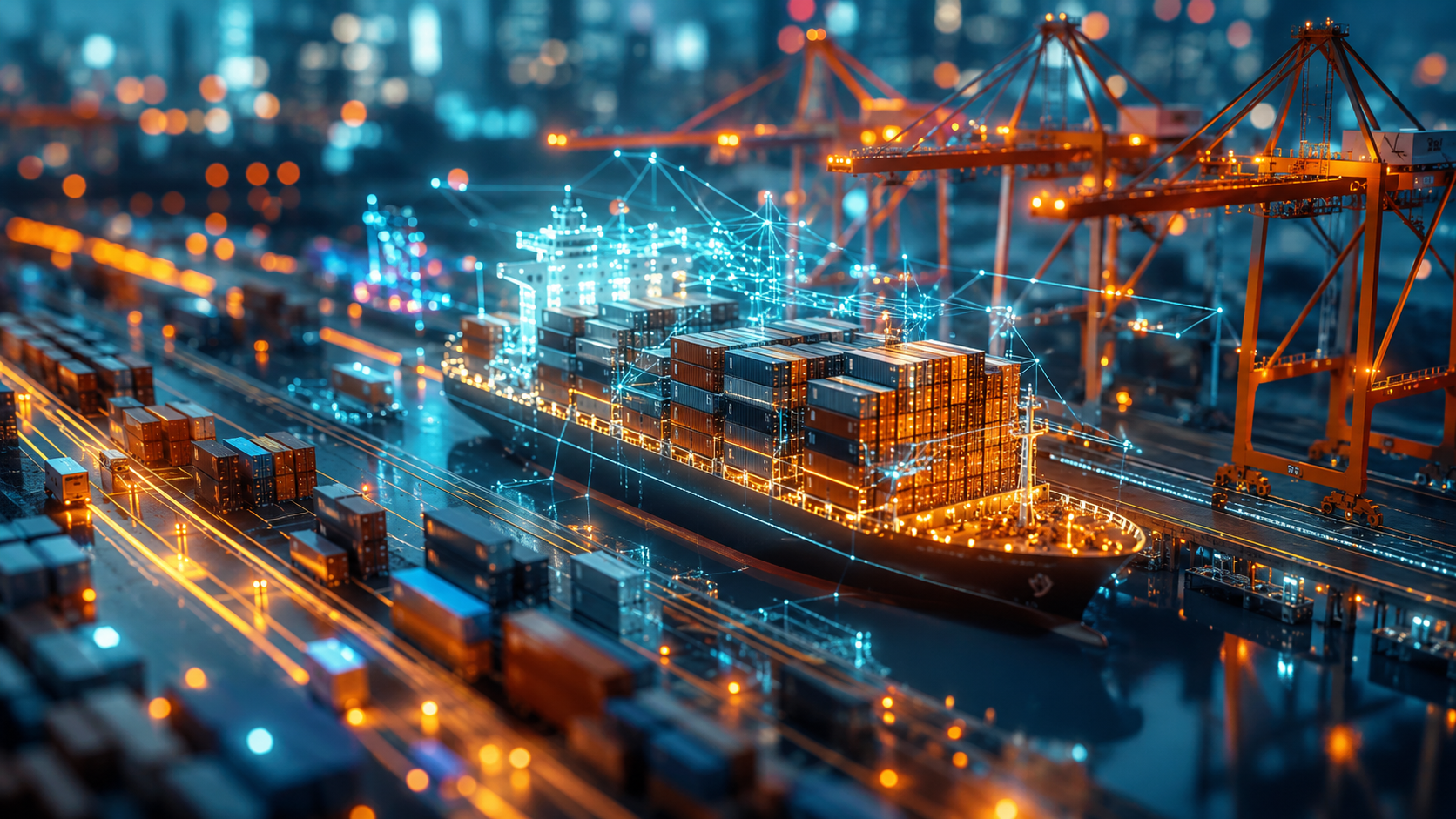
AI is also increasingly embedded into global logistics infrastructure. Major ports such as Port of Yantian now use AI-driven systems to improve container flow management, predict congestion, optimise vessel scheduling and reduce turnaround times. During the Chamber’s trade mission to China in April, delegates visited Yantian to explore how smart logistics technology and AI-enabled port operations are helping shape the future of global trade efficiency.
In warehousing and distribution, AI is also supporting inventory automation, route planning and real-time supply chain visibility.
For UK exporters, this can improve fulfilment planning, protect customer commitments and strengthen competitiveness — particularly where geopolitical disruption, shipping volatility or fluctuating buyer demand may affect international performance.
Used strategically, AI can help exporters improve responsiveness, protect continuity and reduce inefficiencies across increasingly complex global supply chains.
Translation, Communication and Global Trade Accessibility
AI-powered translation tools are reducing language barriers and making international trade more accessible.
Exporters are using AI to localise websites, translate product information, adapt marketing content and support multilingual customer communication more quickly and cost-effectively.
Businesses are also using AI-powered chatbots and real-time translation tools to support overseas customer enquiries, distributor communications and multilingual e-commerce activity more efficiently.
For SMEs, this can expand international reach without large in-country teams. However, human oversight remains essential where legal terminology, technical specifications or cultural nuance matter.
AI can accelerate communication — but accuracy, credibility and commercial judgement remain critical.
The Risks: Accuracy, Bias and Over-Reliance
Despite its advantages, AI introduces real commercial risks. Inaccurate regulatory guidance, flawed customs assumptions, biased market analysis, weak data governance or overdependence on automation can all create strategic vulnerability.
For UK importers and exporters, blind reliance on AI may create compliance failures or poor commercial decisions if outputs are not critically assessed.
The strongest approach is strategic integration: combining AI speed and analytical capability with professional expertise, sector knowledge and commercial judgement.
Competitive Advantage, Not Replacement
AI is unlikely to replace strategic trade professionals, customs expertise or relationship-led international business development. What it can do is improve speed, expand intelligence and support smarter decision-making.
“The real opportunity with AI is not automation alone — it is the ability to make faster, more informed international trade decisions,” says Carla Assunção, Digital Manager at Chamber International. “Businesses that combine AI capability with strong commercial strategy are likely to be better positioned for long-term international growth.”
For UK importers and exporters, AI offers significant potential — from identifying new markets and improving compliance processes to enhancing customer reach and operational resilience.
But the businesses most likely to benefit will be those that treat AI as a commercial enabler rather than a substitute for expertise.
In international trade, AI may increasingly shape how business is done — but sustainable success will still depend on informed human judgement.
By Carla Assunção, Chamber International
Follow Chamber International on Twitter @ChamberInt and on LinkedIn for the latest in international trade.