UK extends tariff-free imports on 269 products until 2028, offering potential savings for businesses
28 October 2026
UK businesses importing raw materials, components and specialist products could benefit from continued reductions in customs duties following a Government decision to extend tariff suspensions on 269 products until 31 December 2028.
Announced on 23 October 2026, the measures are expected to maintain savings of up to £155 million annually, supporting businesses across industries including chemicals, plastics, hydrogen, automotive manufacturing, and food and drink.
The decision provides greater certainty for importers and manufacturers while creating a new opportunity for businesses to request further tariff reductions.
Which tariff suspensions are being extended?
Following a public consultation, the Government has confirmed three developments:
-
269 tariff suspensions due to expire on 31 December 2026 will be extended until 31 December 2028.
-
Approximately 90 additional suspensions, originally due to expire in June 2027, will be extended until December 2027, allowing further time for a review.
-
23 existing suspensions will expire at the end of 2026 because they no longer have a material effect, including where other measures have superseded them.
The extensions will allow qualifying products to continue benefiting from reduced or zero customs duties.
According to the Government's announcement of 23 October, the measures are expected to support businesses across several industrial sectors, particularly those relying on imported materials and components.
Which products and commodity codes are affected?
The extensions cover a range of specialist materials and products used in UK manufacturing and other industries.
However, eligibility depends on the specific commodity code and detailed product description, rather than the general industry or product category.
The following table identifies relevant tariff chapters and headings businesses may wish to examine.
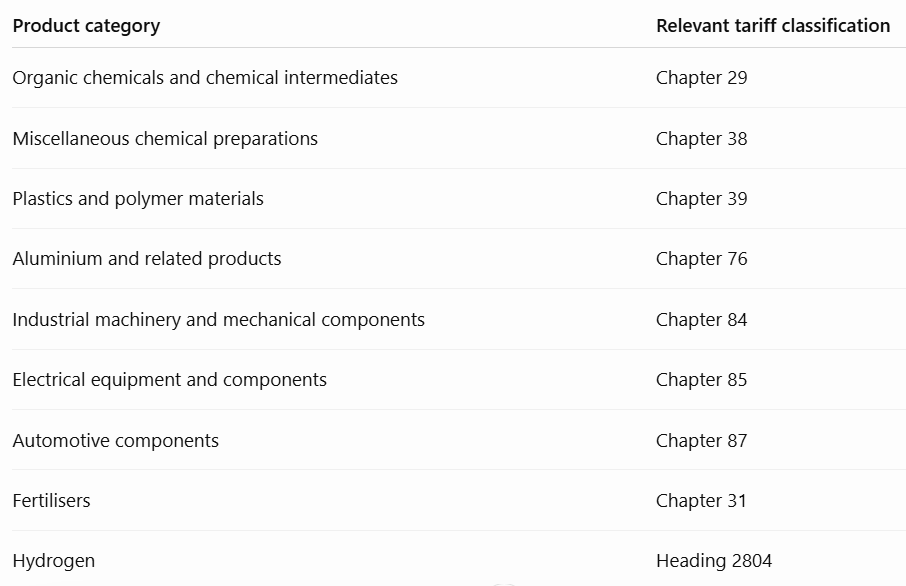
These are general classification references, not confirmation that every product within these chapters benefits from an extended suspension.
Importers should consult the Government's duty suspensions guidance for the official list of affected products.
For detailed commodity codes, product descriptions, suspended rates and expiry dates, businesses can also refer to HMRC's tariff suspension reference documents.
It is important to check the exact technical description of the product. A suspension may apply only to goods meeting particular specifications, even where other products share the same broader tariff heading.
How do tariff suspensions work?
Tariff suspensions temporarily reduce or remove the normal customs duty payable on specified imported goods.
They are designed to support UK businesses by reducing import costs, particularly for materials and components used in manufacturing.
Most suspensions reduce the applicable duty rate to 0%, although some provide partial reductions.
Unlike preferential tariffs under free trade agreements, duty suspensions generally apply on a Most Favoured Nation basis. This means qualifying goods can benefit regardless of their country of origin, subject to the conditions of the measure.
However, suspensions do not automatically remove import VAT, anti-dumping duties or other applicable charges.
Businesses should therefore consider the full customs treatment of their goods before calculating potential savings.
What could businesses save?
The financial benefit depends on the product, its normal customs duty rate and the value of imports.
For example, a business importing £500,000 worth of qualifying materials annually, normally subject to 6% customs duty, could save £30,000 per year if an applicable suspension reduces that duty to zero.
For manufacturers importing substantial quantities of materials or components, the savings could help improve margins, reduce production costs and maintain competitive pricing.
UK exporters using imported components in their manufacturing processes may also benefit indirectly through lower production costs.
Importers can check the rates applying to their products using the UK Trade Tariff, which provides commodity classifications, duty rates and applicable tariff measures.
New opportunity to request further tariff reductions
The Government has announced a new application and consultation window running from 11 November 2026 to 3 February 2027.
During this period, businesses will be able to propose additional products for temporary duty reductions or removal.
They will also have an opportunity to submit views on whether existing suspensions due to expire in December 2027 should be extended further.
This could be particularly relevant to businesses importing specialist materials or components where customs duties significantly increase production costs.
Companies considering an application should begin gathering information about their products, including:
-
Commodity codes and technical specifications
-
Annual import values and volumes
-
Current customs duty rates
-
Potential financial benefits of a suspension
-
The commercial reasons supporting the proposed reduction
Further information about the application process will be available through the Government's duty suspensions guidance.
What should UK importers do now?
Businesses already benefiting from tariff suspensions should confirm whether their products are included in the extensions and check the revised expiry dates.
Other importers may wish to review their commodity classifications and purchasing arrangements to identify potential duty savings.
The forthcoming consultation also provides an opportunity for businesses to influence future tariff policy, particularly where reduced duties could support manufacturing, investment and international competitiveness.
With the application window opening on 11 November 2026, now is an appropriate time to review import costs, identify relevant products and consider whether additional tariff relief could benefit business operations.
By Carla Assunção, Chamber International
Could your business be paying more import duty than necessary?
Our international trade specialists can help you review commodity classifications, identify potential duty savings and understand the customs requirements affecting your imports.
Follow Chamber International on LinkedIn for the latest in international trade.